.png)
Rain Barrels
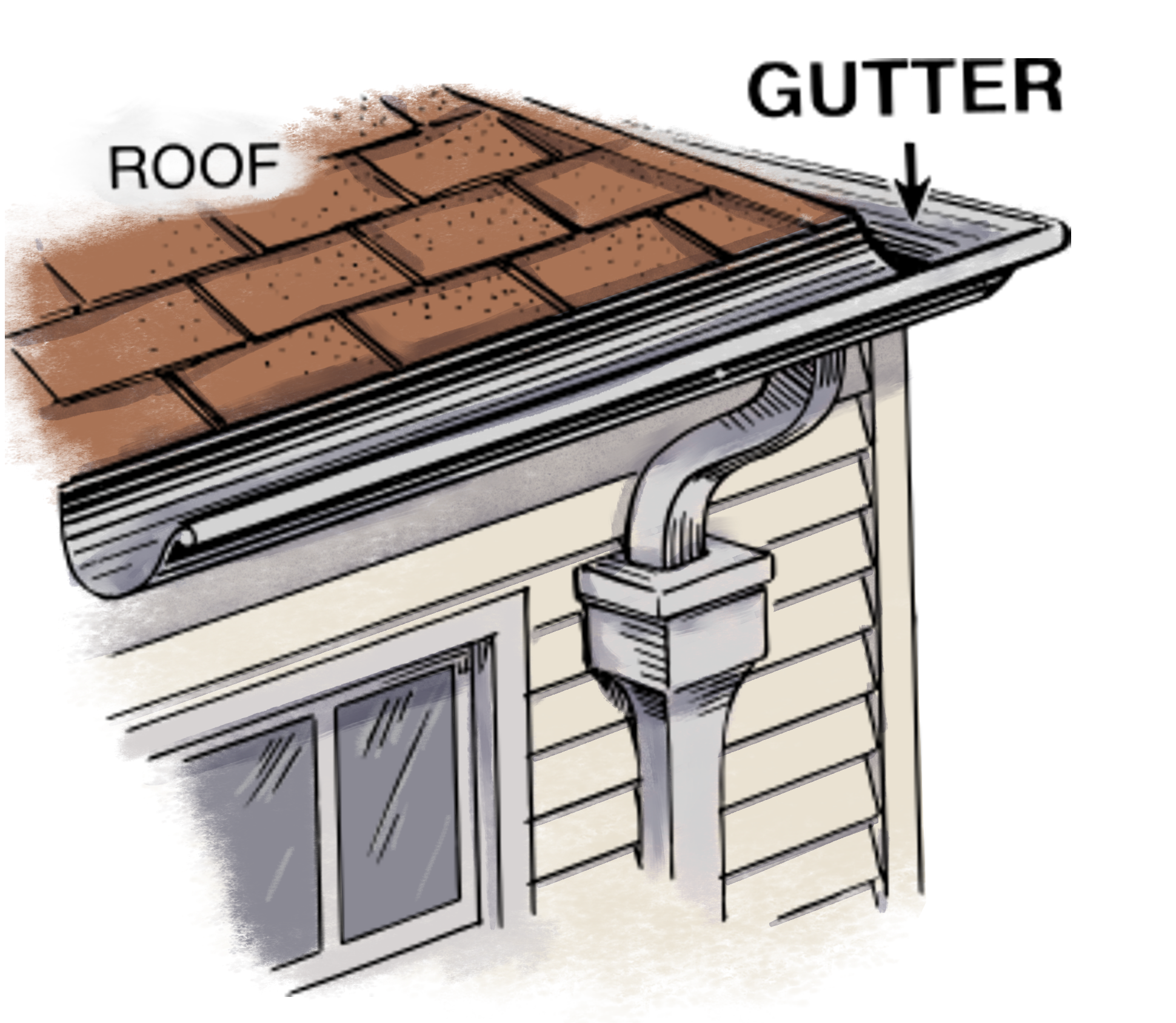
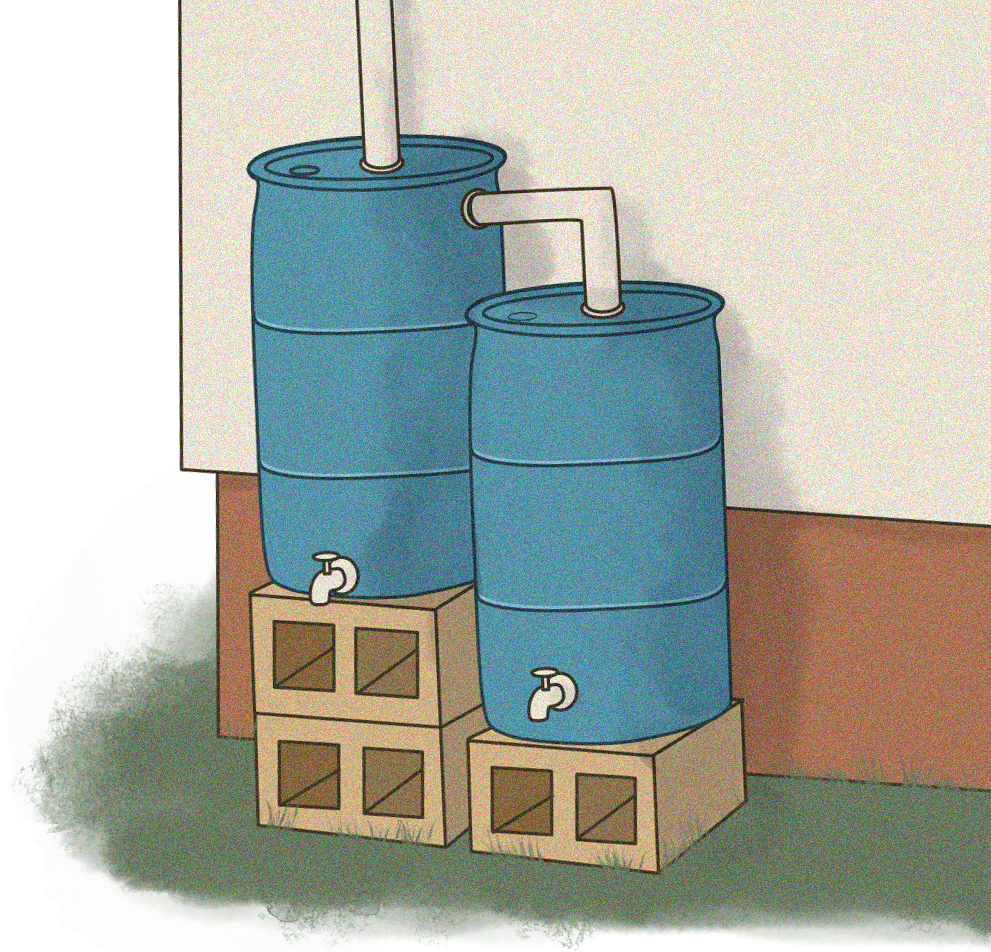
Rain barrels (also called rainwater tanks) collect rainwater runoff from rooftops by using eavestroughs and downspouts to carry and funnel water into the barrel.
|
|
Since this is untreated water, it is healthier for the plants in your garden [1] while also saving you money on your water bill.
The use of the barrels can assist drought-prone areas by collecting water in the rainy season which can then be used during the dry season. This reduces the strain on local water reserves.
Before Buying
Many cities do also have incentives to buy rain barrels, so be sure to do some research on that for your area.
Some places (such as some USA states) have different regulations regarding water capture, so please look into that as well. [2]
Tips:
- Barley: If you are having trouble with algae, try barley. It helps restrict algae growth. [3]
- Mosquito Dunks: If you have a open-faced (no mesh or cover) barrel, consider a mosquito Dunk to help deal with mosquito larvae in a safe way. [4]
- Timers: If you water at the same time every day, consider a battery-operated faucet timer and a soaker hose
- Gravity: If you can get your barrels higher than the ground you are planning to water, you should be able to water without problems
DIY Option
Supplies:
- Garbage can with a lid
- Valve Spigot
- Screening
- Drill and drill bit
- Waterproof duct tape
Instructions:
- Use the drill and drill bit to make a hole near the bottom of the container for the valve spigot.
- Install the valve spigot (installation instructions will vary depending on what you buy)
- Use the drill and large drill bits to make a hole or several holes in the lid.
- On the top side of the lid, cut the screening so it will cover the holes, and tape in place with the water proof duct tape.
- Place the lid upside down over the container so the rim of the lid helps to funnel the water
- Place your new rain barrel under your downspout.
- Optional: Add another tap near the top of the container if you want to link multiple containers.